Herman Van Ingelgem - Zur Gesundheit - until 8 February 026

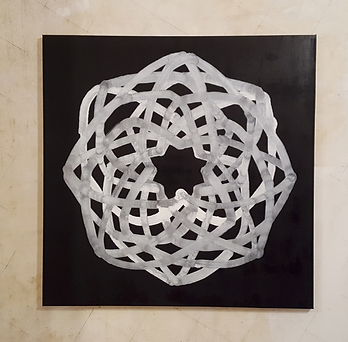
Marc Rossignol
Synchrone
Opening Sunday 9 September 2018
.png)
Marc Rossignol
Synchrone
Opening Sunday 9 September 2018
.png)
Marc Rossignol
Synchrone
Opening Sunday 9 September 2018
Marc Rossignol
Synchrone
Opening Sunday 9 September 2018
Herman Van Ingelgem
Foreign Bodies & Protheses
06/09/2021 - 17/10/2021


MARIE CLOQUET – ULTRAVIOLENCE - ANNIE GENTILS GALLERY
FINISSAGE SUNDAY 29 MARCH - 3 - 6 PM
Marie Cloquet presents a cohesive body of work that unfolds from a single overarching theme: ultraviolence.
This visual response to violence and vulnerability examines how we relate to horror, powerlessness, and the need for protection in a world that continuously produces and consumes images of conflict.
Cloquet works with existing visual material depicting war, invasions, and bombardments, sourced from news and media reports.
These confronting testimonies of our time are translated into layered silkscreen prints,
in which painted fragments and interventions partially obscure and restructure the original imagery.
What emerges is a new, seemingly coherent whole that raises questions about fabrication, truth, and perception,
and about the ways in which violence is graphically shaped and commodified.
The title Ultraviolence explicitly references both pop culture and the gaming world, where brutality is aestheticized, and shock becomes a marketable product.
Set against this harsh, distanced gaze, Cloquet introduces a more intimate register. In hushed compositions, she weaves together hand-coloured collages and analogue studio photographs of everyday yet charged objects: soaps from the Arab world made from olive oil, and textile motifs from her family home.
When Aleppo was bombed, she instinctively reached for the last remaining pieces of Aleppo soap she owned.
A small, deeply personal gesture born of helplessness. Satellite images of bombardments are brought together with a bedspread from the guest room of her grandparents and the curtains from her childhood bedroom, fabrics that were lovingly preserved for years. Graphic textiles, with their associations of domesticity, pyjamas, and a space of comfort and care, stand in stark contrast to the violence of nocturnal bombings.
Collecting blankets and clothes is often an initial reflex in attempts to help.
The all-too-familiar images of refugee camps, where once carefully chosen colours and patterns are transformed into barely sufficient functionality as tents, shelter, and covering, link this new body of work to Cloquet’s earlier Nouadhibou series.
The collateral damage of capitalism creates the world’s dumping grounds as places of last resort. Images of conflict, of children orphaned amid rubble, waste, and destruction, are overwhelming and hard to bear, yet equally unbearable to look away from. The materials function as tangible forms of shelter and softening, set against a brutal reality.
Together, these works articulate the tension between world and home, between collective trauma and personal memory.
They reveal how we navigate between confrontation and withdrawal, between looking and protecting.
Cloquet’s oeuvre testifies to the need for both reflection and care and underscores the enduring power of images,
not only to expose the senselessness of violence presented as a condition of our safety, but also to create space for healing and consolation in times of unrest.
(text: Femke Vanden Bosch)
Marie Cloquet lives and works in Ghent
Marie Cloquet
Ultra Violence

Natural pigments, acrylics, UV varnish, UV print on aluminium, 235 x 280 cm Unique

natural pigments, acrylics, uv varnish, uv print on aluminium, 235 x 280 cm Unique

Silkscreen, natural pigments, acrylics on prepared aluminium, 120 x 130 cm

Silkscreen, natural pigments, acrylics on prepared aluminium, 120x130 cm

Exhibition view ultraviolence

Exhibition view Ultraviolence

Silkscreen & natural pigments on fabric, 61 x 45cm

Silkscreen & natural pigments on fabric, 86 x 117 cm

Silkscreen & natural pigments on fabric, 86 x 117 cm