Herman Van Ingelgem - Zur Gesundheit - until 8 February 026

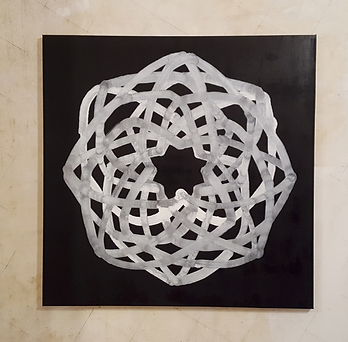
Marc Rossignol
Synchrone
Opening Sunday 9 September 2018
.png)
Marc Rossignol
Synchrone
Opening Sunday 9 September 2018
.png)
Marc Rossignol
Synchrone
Opening Sunday 9 September 2018
Marc Rossignol
Synchrone
Opening Sunday 9 September 2018
Herman Van Ingelgem
Foreign Bodies & Protheses
06/09/2021 - 17/10/2021


.jpg)
%202.jpg)
Dear visitor,
You can approach this exhibition in a variety of ways. You may view it as a collection of thirteen, distinct, autonomous still lives, each with their qualities and significances, but you can also see them as one big installation of painted images that encompasses both floors of the gallery. In that case, repetition, variation and time play as important a role as paint, ground, colour, form or composition.
Zur Gesundheit (13 still lives)* is my fifth exhibition at Annie Gentils Gallery. In a certain sense it is an immediate consequence of the previous one. It begins with an image that was then shown at the end, a dessert plate decorated with willow catkins. And, just as then, I take as my starting point the functional items and decorative objects with which we surround ourselves, whether consciously or unconsciously, such as fruit, flowers, animals, or landscapes. This time, homely artifacts that evoke a historical or social origin, such as hunting, agriculture, labour or human relationships are also included.
I find these objects in second hand shops, those places where rhopography* and megalography* meet and merge. If so-called social media offer a kaleidoscopic image of contemporary man, in how he wishes to present himself, second-hand shops provide images of people as they truly were. Every time I enter them, I feel and smell the countless hankerings and fears of the former owners of all that stuff.
Zur Gesundheit (13 still lives) is the first show in more than twenty years in which I am showing painting again. I find it difficult to use the word 'paintings'. To me, the term emphasises too strongly the character of institutionalised cultural products anchored in an authoritarian system of value. When we speak of paintings, it seems as if we are reducing the complex wealth of painting to saleable merchandise. And, let’s be honest, there is nothing so boring as merchandise.
What makes painting so interesting to me is the strange relationship between the physical (the tactile, analogue act of smearing a substance on a ground) and the mental (the possible discursive meanings that arise when one looks at that substance on a ground). This relationship is never univocal, or complete, but continually subject to fascinating, unpredictable transformations. The still life, the world of the immutable things, is a fertile genre with which to explore that relationship.
I have tried to determine whether the still life can still be relevant in the hyper-changeable world we are experiencing today. I wondered how trivial, apparently inane objects from our immediate, familiar surroundings could (re)present political, societal and social structures and thereby determine and give meaning to our everyday lives.
Good viewing!
Herman Van Ingelgem
+ Emiel Roothooft wrote the text Epiphenomenography for this show.
Herman Van Ingelgem
ZUR GESUNDHEIT (13 stillevens)

Oil paint on chipboard, 125 x 150 cm

Detail - Oil paint on chipboard, 125 x 150 cm

Detail - Oil paint on chipboard, 125 x 150 cm

Oil paint on chipboard, 125 x 150 cm - detail


Oil paint on chipboard, 125 x 150 cm

Detail - Oil paint on chipboard, 125 x 150 cm

Detail - Oil paint on chipboard, 125 x 150 cm

Oil paint on chipboard, 125 x 300 cm