Herman Van Ingelgem - Zur Gesundheit - until 8 February 026

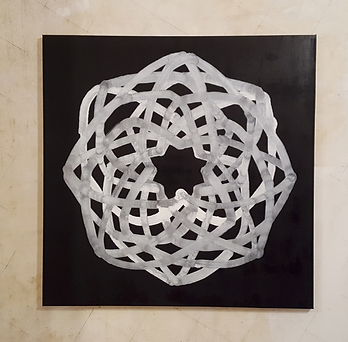
Marc Rossignol
Synchrone
Opening Sunday 9 September 2018
.png)
Marc Rossignol
Synchrone
Opening Sunday 9 September 2018
.png)
Marc Rossignol
Synchrone
Opening Sunday 9 September 2018
Marc Rossignol
Synchrone
Opening Sunday 9 September 2018
Herman Van Ingelgem
Foreign Bodies & Protheses
06/09/2021 - 17/10/2021


Curent Exhibition:
JACQUELINE PEETERS - THE PAINTING LESSON
OPENING SATURDAY 10.10.2026, FROM 15:00 TO 19:00
EXHIBITION 10.10 – 22.11.2026
Jacqueline Peeters returns to Annie Gentils Gallery for her second solo exhibition with the gallery since 2023.
The Painting Lesson is Jacqueline Peeters’s second solo exhibition at Annie Gentils Gallery. On the floor downstairs, Peeters presents several large paintings - layered and patined as a result of her frequent overpainting – alongside smaller, more loosely painted works. In Peeters’s oeuvre, rage competes with stillness, boldness with tristesse. Her work balances between romantic scenes – a mountainous landscape, a lovers’ bed - and a more matter-of-fact stance. When she loses herself in the former, she seeks a counterweight by painting something concrete: an invitation card, a personal ad, a floor plan, or a list of art collectors' names.
In the room upstairs, Peeters shows her works on paper. These are colourful and, due to the use of olive oil, partly transparent, thus revealing her earlier drawings on the back side. It is as if Peeters wants to shrug off all heaviness. By hiding and revealing, through frolic self-mockery and drama, Peeters gives us a lesson in painting.
The Painting Lesson is de tweede solotentoonstelling van Jacqueline Peeters bij Annie Gentils Gallery. Op de benedenverdieping toont Peeters enkele grote schilderijen – gelaagd en met een patina door het herhaaldelijk overschilderen – evenals kleinere, losser geschilderde werken. In het oeuvre van Peeters strijden razernij en verstilling, vrijmoedigheid en melancholie met elkaar. Haar werk balanceert tussen romantische taferelen – een berglandschap, een liefdesbed – en een eerder praktische benadering. Wanneer ze zich verliest in het eerste, zoekt ze een tegenwicht door iets concreets te schilderen: een uitnodigingskaart, een contactadvertentie, een plattegrond of een lijst met namen van kunstverzamelaars.
Op de bovenverdieping toont Peeters haar werken op papier. Deze zijn kleurrijk en, door het gebruik van olijfolie, deels transparant, waardoor haar vroegere tekeningen op de achterzijde zichtbaar worden. Het lijkt alsof Peeters alle zwaarte van zich af wil schudden. Door te verhullen en te onthullen, met speelse zelfspot en drama, geeft Peeters ons een les in schilderen.


Annie Gentils Gallery
Peter Benoitstraat 40
2018 Antwerpen
Belgium
T: +32 477756721
OPENING HOURS
Wednesday — Saturday
14h —18 h
and by appointment
